The 5 IntelAlytic Insights That Defined the Body Armor Industry in 2025
2025 Was Not a Normal Year for Body Armor
2025 forced the body armor industry to confront hard truths.
Global trade friction reshaped supply chains.
Ballistic standards confusion continued to delay procurements.
NIJ compliance was widely misunderstood — and often misrepresented.
Federal funding remained underutilized.
Procurement red flags multiplied as new entrants flooded the market.
At IntelAlytic, we don’t publish content for clicks. We publish actionable insights. The five insights below were not written as opinion pieces or marketing blogs. They were built from advisory work across compliance, procurement, risk management, and standards interpretation for agencies, manufacturers, and suppliers operating in the defense and public safety ecosystem.
This article serves as a 2025 Intelligence Review: A single reference point linking our most impactful insights, with direct access to the full analysis behind each one.
If you are planning procurement cycles, compliance strategies, or market positioning for 2026, this is your starting point.
1. Trade Wars & Tariffs: How Global Pressure Reshaped Body Armor Supply Chains
2025 exposed how fragile “just-in-time” sourcing really is.
Body armor manufacturing depends on globally sourced inputs — advanced ceramics, aramid fibers, UHMWPE composites, and specialized coatings. In 2025, escalating trade disputes, tariffs, and export controls directly impacted material availability, lead times, and pricing.
Manufacturers faced difficult tradeoffs:
Absorb tariff costs or pass them downstream
Reshore production and accept higher overhead
Diversify suppliers and risk qualification delays
Agencies felt the impact as well — longer procurement timelines, cost variability, and reduced vendor predictability.
IntelAlytic Perspective:
Trade risk is no longer an abstract macroeconomic issue. It is now a procurement and compliance risk factor that must be accounted for in sourcing strategy, contract language, and supplier vetting.
2. NIJ vs. VPAM: The Ballistic Standards Confusion Costing Buyers Time and Money
Few issues generated more confusion in 2025 than ballistic standards equivalency.
U.S. agencies reference NIJ 0101 standards.
European tenders rely on VPAM.
Manufacturers often claim “equivalency” — sometimes incorrectly.
IntelAlytic’s comparative analysis made one thing clear:
NIJ and VPAM are not interchangeable labels. They differ in:
Shot placement protocols
Threat definitions and velocities
Conditioning requirements
Pass/fail criteria
Treating them as interchangeable has led to rejected bids, delayed awards, and operational risk.
IntelAlytic Perspective:
Procurement teams must specify threats, test methods, and use cases — not shorthand standard names — especially in multinational or federalized environments.
3. The Patrick Leahy Bulletproof Vest Partnership: Funding Protection That Still Goes Unused
The Patrick Leahy Bulletproof Vest Partnership (BVP) remains one of the most impactful — and misunderstood — funding mechanisms for law enforcement armor procurement.
Administered by the DOJ, the program reimburses up to 50% of qualifying body armor costs. Yet every year, funding goes unused due to:
Incomplete documentation
Non-compliant armor models
Confusion around NIJ requirements
IntelAlytic’s guide helped agencies and suppliers align procurement strategy with funding eligibility — reducing friction between purchasing, compliance, and reimbursement.
IntelAlytic Perspective:
Funding success is not about finding money — it’s about documentation discipline and verified compliance.
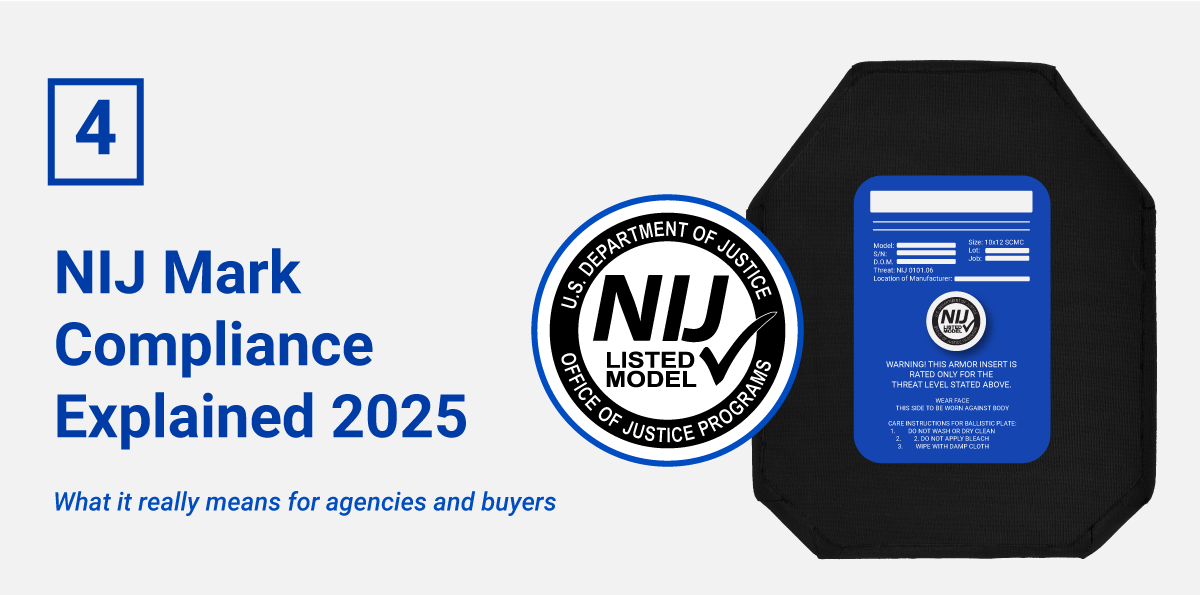
4. The NIJ Mark in 2025: What It Actually Means (and Why It Matters)
One of the most consequential insights of 2025 addressed a widespread industry misconception:
NIJ does not “certify” armor.
NIJ validates compliance through testing and publishes compliant models on the NIJ Compliant Products List (CPL). Misuse of NIJ language, logos, and implied certifications continues to mislead buyers — sometimes unintentionally, sometimes not.
IntelAlytic’s definitive guide clarified:
Where the NIJ Mark is legally permitted
Why “tested to NIJ standards” is not compliance
How agencies should verify claims before purchase
IntelAlytic Perspective:
NIJ misunderstanding creates procurement risk, legal exposure, and safety concerns. Verification must be procedural — not assumed.
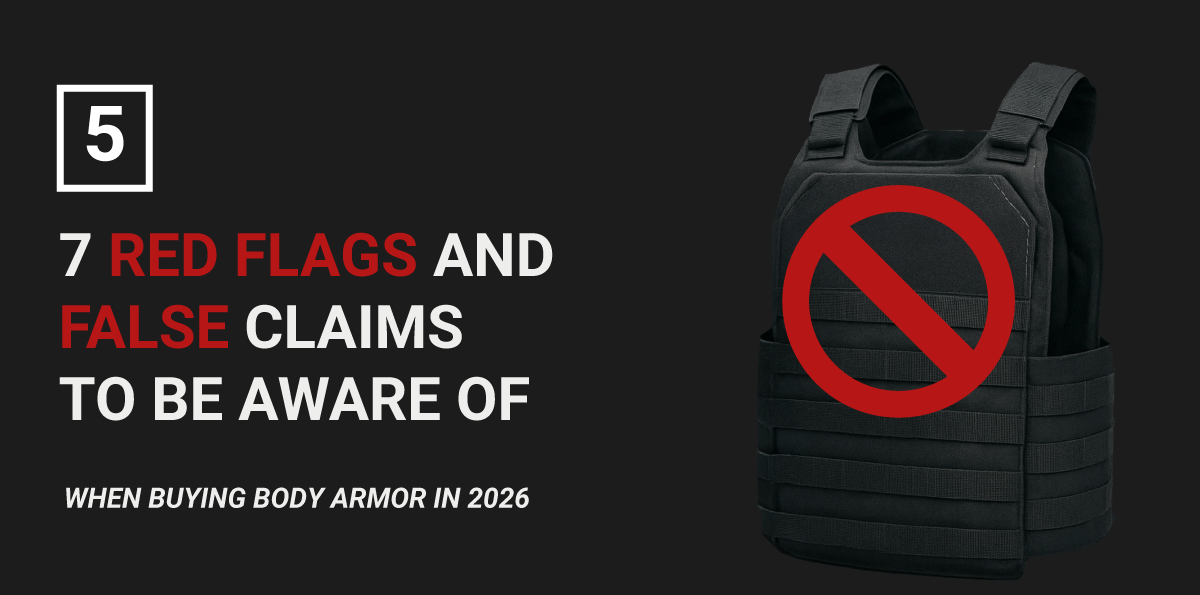
5. Armor Red Flags: How Bad Claims Slip Past Procurement Teams
As demand surged, so did market noise.
IntelAlytic identified recurring red flags that continue to undermine procurement integrity:
Vague or unverifiable test claims
Misrepresented materials
Inconsistent model numbers
Suspicious pricing disconnected from material reality
These red flags are not academic — they directly impact officer safety, agency liability, and public trust.
IntelAlytic Perspective:
Procurement success depends on verification systems, not trust alone. Data transparency is now a safety requirement.
Where IntelAlytic and The Armor List Fit In
These insights are not theoretical and they are not written in isolation.
They are built from hands-on advisory work across the armor lifecycle, including:
NIJ compliance and lab readiness
Quality systems (ISO 9001, BA 9000, document control, Risk Register, CAR)
Product testing, failure analysis, and re-test strategy
Government procurement, contracts, and bid alignment
Market entry, claims validation, and go-to-market execution
Every insight you just read reflects real programs we run, real documentation we deliver, and real decisions clients must make under time, budget, and compliance pressure.
That work is reinforced by The Armor List, the industry’s live research platform for body armor products, companies, materials, and standards.
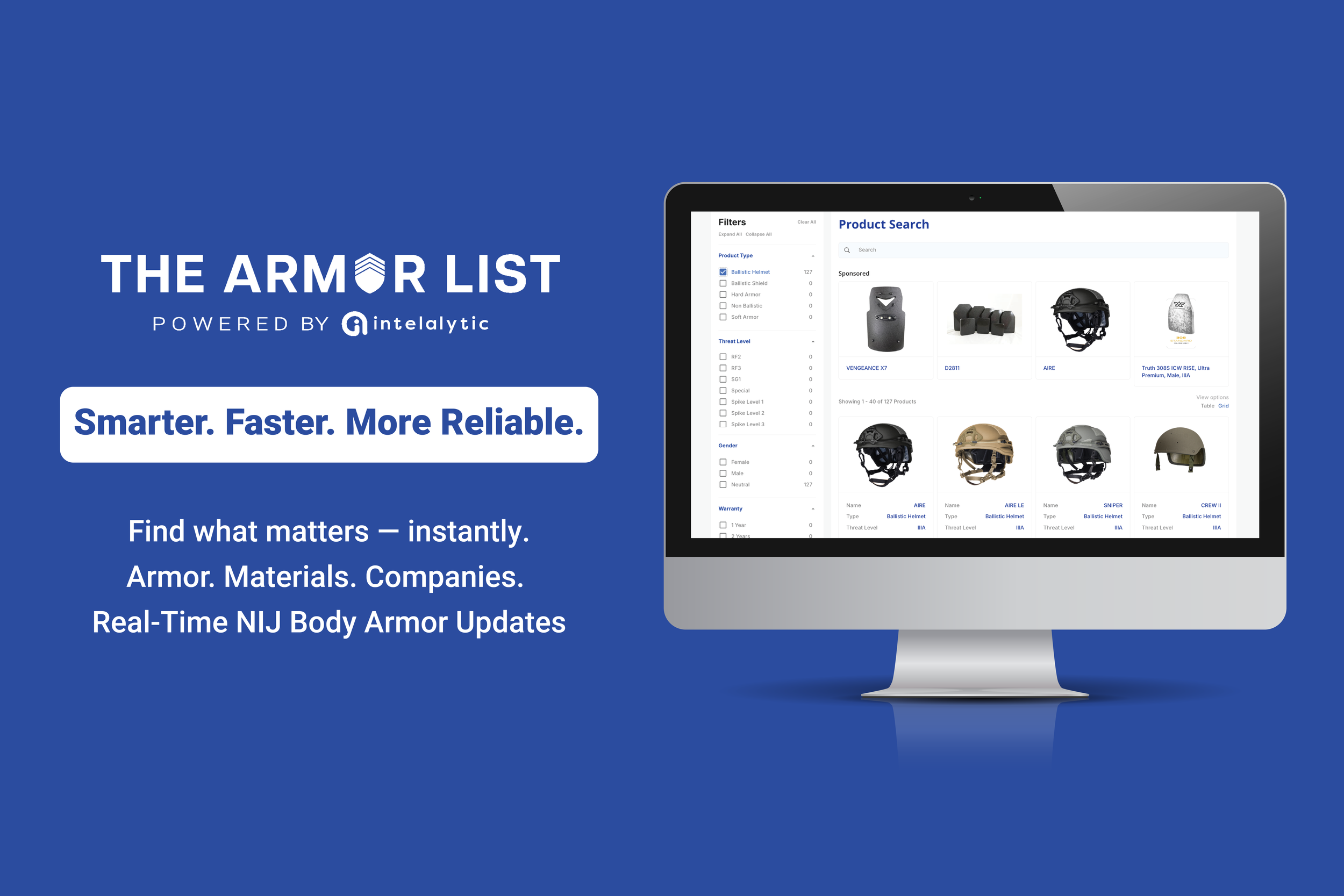
The Armor List is Where Research Becomes Usable:
Verified product data tied to real models and manufacturers
NIJ CPL context shown next to products and materials
Audit-safe claims visibility (no mystery language)
Procurement-ready comparisons for buyers, agencies, and integrators
Closing the Gap Between Regulations, Market Claims, and Real-world Decisions
Together, IntelAlytic and The Armor List close a gap the industry has lived with for too long. The gap between regulations on paper, claims in the market, and decisions made under pressure.
As we move into 2026, that gap is shrinking. Buyers are asking better questions. Agencies expect documentation they can defend. And manufacturers are increasingly judged by what can be verified, not what can be said.
If you operate anywhere in the body armor ecosystem, credibility is no longer optional. It is part of the product.
For organizations interested in being visible where real research happens, The Armor List offers limited sponsored placements tied to verified data and standards context. Not to push products, but to support informed decision making as procurement and certification planning accelerates.
Want Your Company or Products Visible Where Real Research Happens?
Sponsored placements on The Armor List put your data, compliance posture, and positioning in front of verified buyers and decision-makers — alongside standards context, not marketing noise.
Get started:
Sponsored placements are limited as agencies and manufacturers finalize 2026 procurement and certification plans.